

Posted on: 12. 20. 25

In the high-stakes environment of energy production, the integrity of our transport systems is paramount. At Pro-Gas, we recognize that while pipelines are the veins of the industry, they are constantly under threat from a silent, invisible enemy: moisture. When untreated natural gas travels through carbon steel lines, the presence of water vapor is not just an efficiency concern, it’s the primary catalyst for internal degradation.
Let’s walk through the critical function of natural gas dehydrators and how they serve as the first line of defense against infrastructure failure. We will examine the chemical processes that lead to decay, the various technologies used to extract moisture, and the long-term benefits of maintaining a dry system. By the end of this guide, you will understand why high-quality dehydration is the most cost-effective insurance policy for your operation.
The Silent Threat | Understanding Internal Pipeline Corrosion
When we talk about pipeline corrosion, we are often referring to the electrochemical reaction that occurs when liquid water settles on the interior surface of a pipe. In the oil and gas sector, this is rarely “pure” water. It is typically a brine solution that, when combined with acidic gases like Carbon Dioxide (CO2) or Hydrogen Sulfide (H2S), creates a highly corrosive environment.
Without the intervention of dehydrators, these contaminants react with the steel to form iron carbonates or sulfides, leading to “pitting” — a localized form of damage that can cause pinhole leaks or catastrophic ruptures. By removing the water, we effectively remove the medium required for these chemical reactions to take place. Consider linking to our article on [internal corrosion monitoring] to learn how to detect these issues before they escalate.
The Chemistry of Wet Gas
- Acid Gas Formation | When CO2 dissolves in water, it forms carbonic acid, which aggressively attacks carbon steel.
- Microbial Induced Corrosion (MIC) | Stagnant water provides a breeding ground for sulfate-reducing bacteria (SRB) that accelerate metal loss.
- Oxygen Contamination | Even trace amounts of oxygen in a wet system can exponentially increase the rate of oxidation.
Engineering a Solution | How Dehydrators Function
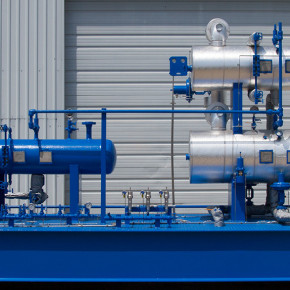
To combat these threats, we employ natural gas dehydrators designed to meet stringent pipeline quality standards, often referred to as “tariff gas” (typically containing less than 7 lbs of water per million cubic feet). These systems work by utilizing the principles of absorption or adsorption to strip water molecules from the gas stream.
The Absorption Process | Glycol Dehydration
The most prevalent technology in our industry is the glycol dehydration unit. This system uses a liquid desiccant, usually Triethylene Glycol (TEG), which has a powerful natural affinity for water.
- Contacting | Wet gas enters the bottom of a contactor tower and rises through trays or packing. Simultaneously, “lean” (dry) glycol is pumped into the top and flows downward.
- Absorption | As the gas and glycol meet, the glycol “soaks up” the water vapor.
- Regeneration | The now “rich” (wet) glycol is sent to a reboiler where it is heated to approximately 400°F. The water is boiled off as steam, and the purified glycol is recirculated.
This continuous loop ensures that the gas exiting the top of the tower is dry and ready for safe transport. For more information on thermodynamic properties of glycols, consider linking to The Engineering ToolBox for more information.
The Adsorption Process | Solid Desiccant Dehydrators
In scenarios where extremely low dew points are required—or for remote locations where a reboiler flame is undesirable—we utilize solid desiccant dehydrators. These units pass gas through a bed of porous material like silica gel or molecular sieves. The water molecules adhere to the surface of the desiccant through a process called adsorption.
Beyond Decay | Preventing Hydrates and Blockages
While pipeline corrosion is a major focus, dehydrators also solve the problem of hydrate formation. Gas hydrates are ice-like crystalline structures that form when water and hydrocarbons combine under specific temperature and pressure conditions.
These “ice plugs” can completely block a pipeline, leading to costly emergency shutdowns and potential safety hazards during removal. By maintaining a water dew point well below the lowest ambient temperature of the pipeline, we ensure that hydrates never have the chance to form.
The Pro-Gas Advantage | Integrated Moisture Management
At Pro-Gas, we believe that equipment should work in harmony. Our natural gas dehydrators are designed to integrate seamlessly with our other production technologies, such as JT Skids and portable NGL storage. This holistic approach ensures that not only is the water removed, but valuable natural gas liquids (NGLs) are captured and managed efficiently.
By choosing our specialized dehydration packages, you are investing in the longevity of your assets. We have seen firsthand how a properly sized and maintained dehydrator can extend the life of a gathering system by decades, saving operators millions in replacement costs and environmental remediation.
Enhance Your Production with Pro-Gas
The role of dehydrators in our industry cannot be overstated. By effectively removing moisture, these machines prevent the devastating effects of pipeline corrosion, eliminate the risk of hydrate blockages, and ensure that the gas meets the high-quality standards required by end-users.
Is your current system struggling with moisture carryover or high maintenance costs? Contact our engineering team today to request a site-specific evaluation. We can help you size the perfect dehydration package to protect your pipelines and maximize your production uptime.
FAQ | Frequently Asked Questions
Q. How often should I test my glycol in a TEG dehydrator?
We recommend performing a comprehensive glycol analysis at least once every six months. This test should check for pH levels, water content, and the presence of hydrocarbons or salt, which can indicate internal issues or the need for a “reclaiming” process.
Q. Why is H2S particularly dangerous in a wet pipeline?
Hydrogen Sulfide (H2S) reacts with liquid water to form sulfuric acid and iron sulfide. This not only causes rapid pipeline corrosion but can also lead to “hydrogen blistering” or “sulfide stress cracking,” which can cause sudden structural failure of the pipe wall.
Q. Can I use a dehydrator to remove more than just water?
While their primary goal is water removal, glycol dehydrators can also capture small amounts of BTEX (Benzene, Toluene, Ethylbenzene, and Xylene) and other volatile organic compounds. However, if the goal is specialized contaminant removal, additional gas sweetening or filtration stages may be required.


