

Posted on: 03. 15. 26

Conditioning raw gas at the wellhead used to mean “meet pipeline specifications.” Now, conditioning has grown to encompass everything you can do to protect high-dollar downstream assets and operate within capital discipline parameters.
This year has placed additional importance on how operations managers and technical engineers can wring the most productivity out of every cubic foot of fuel gas while limiting routine maintenance events on rotating equipment.
As industrial energy systems grow in complexity, so too should your strategy for treating that fuel. Let’s take a look at what’s coming down the pike.
Advanced Fuel Gas Conditioning Strategies
From next-generation filtration to digital oversight, you can help future-proof your processing plant with these three fuel gas conditioning tips.
1. Improve Filtration & Separation
Removal of liquid water and contaminants should always be your first line of defense in fuel gas conditioning, but legacy approaches can be improved with membrane separation technology and enhanced particulate filtration media.
- Membranes vs Glycol: While glycol dehydration units are still very common, membrane separation systems offer operators a smaller footprint and zero volatile organic compound (VOC) emissions. The latest membrane skids offer up to 95% water removal efficiencies and require far less maintenance than traditional thermal regeneration units.
- Solids and NGL Removal: Don’t let solids or natural gas liquids (NGLs) entering your compressor units go untreated. Similarly, if your gas stream feeds into an acid gas removal unit (AGRU), removing NGLs and solids before absorption can improve overall downstream asset performance. Avoid unnecessary unplanned shutdowns by removing solids and NGLs at the source.
- Manage BTU Content: High-BTU gas can negatively impact engine performance through “knock” or turbine derating. Modern multi-stage conditioning skids can chill incoming gas down to -50°F using a Joule-Thomson (JT) valve and heat exchanger network. Dropping your fuel temperature removes heavy hydrocarbons, allowing you to maintain a consistent methane number (MN).
2. Transition to Digital Twins
Digitally monitoring fuel gas conditioning trains isn’t new. What is new, however, is the transition from reactive asset maintenance to fully predictive oversight via digital twin technology.
Digital twins are essentially a real-time digital replica of a process asset or plant. Developing a digital twin of your fuel gas conditioning train lets operators test “what-if” scenarios and model proposed plant configurations without risk to actual assets.
Aggregating IoT sensor data (vibration, temperature, differential pressure) through a digital twin interface can help detect deviations from nominal performance before they occur.
Since these models isolate and analyze data patterns too small for human operators to notice, routine maintenance can evolve to fully predictive maintenance schedules. Asset health monitoring through predictive AI could reduce your unplanned downtime by half.
Tip: Are you constantly battling the same “bottlenecks” in your compression assets? Predictive, prescriptive AI can alert you to impending inefficiencies 72 hours before the lowest performing sensor in your network will.
Including AI predictive models in your regular maintenance schedule could decrease unplanned downtime by 30% to 50%. What’s more, total asset lifespan could see a 40% increase due to the regulatory agility and high-level oversight provided by these platforms. Predictive monitoring will be tablestakes for most processing facilities this year.
Hydrogen Blend Preparation
The race to lower-carbon energy is coming to fuel gas treatment systems in the form of hydrogen blending.
- Audit your hydraulic assets for hydrogen compatibility. All seals and piping should be screened for hydrogen compatibility. While most polyethylene (PE) piping can handle up to 20% hydrogen blending without issue, you may find your metallic valves and pumps require special coatings.
- Instruments will need to be upgraded. Hydrogen isn’t methane, so your gas chromatographs and flow meters should be able to measure hydrogen BTU values in real-time. Otherwise, your combustion turbines could run too “rich” and avoid damaging turbine blades.
- Adjust your pressure regulation ramps. Hydrogen has a lower molecular density than methane, which means your compression and pressure regulation values should be increased proportionally. Failure to account for this can result in your end-use equipment seeing wildly fluctuating levels of energy.
Take 60 Seconds to Check Compliance
Ask yourself these three questions to determine if your gas conditioning is prepared for 2026 safety standards.
- Do your gas conditioning skids have IoT-enabled sensors for methane leak detection?
- Do you find yourself making more “emergency” repairs, as opposed to scheduled maintenance events?
- Is your existing infrastructure hydrogen-ready for 5%-to-10% blends?
If you answered no to any of the above questions, now is the time to reach out to your local processing equipment supplier. Ensuring your fuel gas is properly conditioned before it enters your pipe network can reduce maintenance costs and prevent catastrophic failure.
Call On Pro-Gas LLC | Excellence In Long-Term Productivity
Don’t let the technical jargon of fuel gas conditioning scare you into making expensive or unnecessary changes to your plant. When facing pressure from downtimes and regulatory mandates, who you choose as your partner can make all the difference.
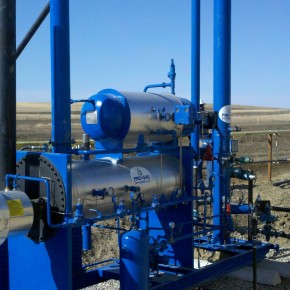
At Pro-Gas, our engineers specialize in custom skid-mounted JT plants and fuel gas conditioning solutions to treat your gas at the source. Contact us today to learn how you can maximize NGL recovery, reduce maintenance costs, and prepare your assets for tomorrow’s industrial energy landscape.
Frequently Asked Questions
Q. How will fuel gas conditioning affect my turbine efficiency?
Condensing water vapor and heavy hydrocarbons before they reach your turbines ensures consistent BTU content while preventing liquid water carryover. Liquid droplets can pit turbine blades and disrupt ideal combustion temperatures.
Q. What are the advantages of using a membrane dehydration system?
Membrane systems are modular and require very little maintenance. They also completely eliminate the need for chemical solvents and fire-tube reboilers used in glycol dehydration units. Just keep in mind that membrane systems aren’t as efficient or proven as glycol dehydration.
Q. Can I retrofit my existing conditioning skid for hydrogen?
Yes, most skids can be upgraded with new sensors, hydrogen-friendly valves, and modified control logic. Our team can help you audit your current systems for compatibility with hydrogen rich-gas streams.


