

Posted on: 08. 15. 26
When operators run equipment or engines on field gas, the makeup of the stream can directly impact equipment health and power output. Everything from emergency shutdowns to aggressive engine wear or catastrophic failure can occur when fuel gas quality suffers. When encountering poor gas quality symptoms, field technicians can use operational knowledge to compensate until permanent fixes are put into place. Learn how to diagnose problems encountered during active fuel gas usage and treat incoming gas for maximum downstream stability.
Why Fuel Gas Quality Changes With Field Conditions
Natural gas quality entering engines naturally changes over time or due to seasonal variables. Variations in feedstock quality at the wellhead, changes in atmospheric temperature, processing plant issues, or inefficient separator designs allow heavy hydrocarbons, water vapor, and contaminants to carry over into fuel gas streams.
Cooler ambient temperatures near the wellhead or along the fuel line cause heavier hydrocarbons such as butane (C4), pentane (C5), or hexane (C6) to condense out of the gaseous phase. Engine intake valves draw this free liquid into combustion chambers. Similarly, if water absorbs too much moisture during downstream processing, glycol will carry over from drying towers into the actual fuel supply. Either way, hardware experiencing liquid droplet exposure faces very serious consequences.
Symptoms of Low Quality Fuel Gas
Equipment experiencing low-quality gas effects on engine performance will warn operators long before failing. Changes in equipment pressure, heat signatures, or vibration can easily pinpoint a gas quality problem.
Engine Knock
Heavy hydrocarbons entering the engine raise the calorific value of the fuel. As gas with heavy hydrocarbons tries to ignite inside the engine, the increased fuel density causes the mixture to detonate or knock. Spark plugs, pistons, and liners suffer extreme heat during this process.
Fuel Line Corrosion
Hydrogen sulfide streaming through the fuel injector will bond with any moisture in the system. Fuel lines rapidly deteriorate from this acidic compound.
Rapid Changes in Engine RPM
Fluctuating methane numbers cause fuel to burn improperly inside the combustion chamber. Rapid changes in fuel density cause governors to constantly adjust speed, stressing generators or compressors linked to the engine.
Engine Health Concerns Related to Fuel Gas Contaminants
Engine damage from bad gas involves many components working inside your equipment. The following table summarizes low quality fuel gas effects on engine performance.
| Fuel Gas Impurity | Impact on Operations | Affected Engine Component |
| Heavy Hydrocarbons C4+ | Engine Knock and Detonation | Piston Rings/Cylinder Head |
| Hydrogen Sulfide H2S | Fuel Injector Corrosion | Fuel Injector or Exhaust Manifold |
| Water Vapor / Free Water | Fuel Line Corrosion | Fuel Line Filters or Pressure Regulator |
| Particulates/Solids | Fuel Control Wear | Fuel Flow/Position Indicator Gauges |
| Carbon Dioxide CO2 | Compression Power Loss | Turbine/Energy Converter |
Heavy hydrocarbon liquids also contaminate lubricating oil. Engine components reliant on thick oil films to prevent metal-to-metal contact face greatly reduced service life when using fuel diluting the crankcase. Journal bearings quickly fail after extensive exposure to diluted oil.
How to Diagnose Fuel Gas Issues During Field Operations
Troubleshooting field gas quality involves taking measured steps to determine fuel chemical makeup. Rule out as many physical causes as possible before using test instruments to verify gas composition.
Step 1 | Visually Inspect Fuel for Heavy Hydrocarbons
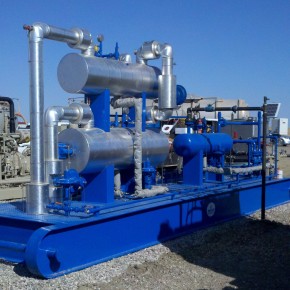
Natural gas engines often use a coalescing separator or liquid knockout pot before fuel enters the engine. Drain the liquid bowl into a clear container. Clear liquids form from heavy hydrocarbons condensing out of the gas stream. Cloudy or oily liquids indicate compressor lubricant is making its way into the fuel supply. For additional protection, operators use Fuel Gas Conditioning / JT Skids to clean fuel gas streams.
Step 2 | Test Actual Gas Composition
Gas chromatography units screw into the fuel gas header. Read out values for methane, ethane, propane, butane, carbon dioxide, nitrogen, and hydrogen sulfide. Calculate the methane number for the incoming fuel supply and verify it is above the manufacturer’s recommended value.
Step 3 | Evaluate Filter Differential Pressure
Ensure pressure gauges across the fuel filter assembly are not showing dramatic increases. Fine liquids or particulates may be coating filter media or screen packets.
Step 4 | Monitor Engine Exhaust Temperatures
Much like a turbocharged engine, fuel gas engines expose uneven heating issues across cylinders. Find which cylinder is reading highest on the EGT and evaluate that position for heavy droplet ingestion.
Test Your Knowledge on Fuel Gas Makeup
- Q. What is the direct cause of engine knock when running on field gas?
A. Liquid droplets raise the overall BTU value of the fuel gas, causing engine knock. - Q. Which engine component is directly affected by wet H2S?
A. Fuel injectors, regulators, and other hardware exposed to fuel will corrode faster.
Treatment Methods to Correct Fuel Gas Quality Issues
There is no one-size-fits-all solution to bad gas problems during field service. Engineers must treat fuel gas based on known impurities present in the fuel stream.
Add Fuel Gas Heat
Fuel gas heaters and Natural Gas Coolers help manage stream temperatures to prevent heavy hydrocarbons and water from condensing inside fuel lines. By keeping fuel above its dew point, only vapor phase fuel enters the engine.
Install Advanced Filters
Fine filters with micron rating down to 0.3 remove both particulates and liquid aerosols. Two-stage filters allow liquid gravity drainage before air blasts mists through secondary filtration media.
Chemically Process Fuel Gas
Media treaters remove hydrogen sulfide from fuel gas streams. Sweetening towers can also physically absorb hydrogen sulfide from the gas stream.
Consider Downstream Gas Treating Equipment
Downstream gas treatment ensures feedstock quality isn’t changing before engines and compressors. Conditioning fuel gas incoming to prime movers protects equipment during field conditions.
Gas scrubbing systems, Portable NGL Storage solutions, or JT units recover heavy natural gas liquids from the well stream. Removing NGLs protects engines and compressors while generating profitable liquid byproducts. Combining these treatments with Natural Gas Compression Packages ensures optimal efficiency and operational stability.
Call Pro-Gas LLC for Industrial Energy Equipment
Fuel gas containing high moisture, liquid droplets, particulates, or hydrogen sulfide will cause serious damage to engines. Use the above information to treat incoming fuel gas for minimal downstream impact. Operators can always contact experienced sales representatives here at Pro-Gas LLC if they have further questions regarding fuel gas quality concerns. Our team of industrial energy experts understands how poor gas quality symptoms affect engines and compressors every day.
In fact, our entire product catalog is engineered to treat fuel gas entering critical compression or power generation equipment. Don’t let unexpected downtime or regulatory compliance issues hinder your production – trust Pro-Gas LLC to outfit your operations with the right equipment the first time. Give us a call today to discuss your individual needs with one of our sales engineers.
Fuel Gas Quality & Field Diagnostics: Frequently Asked Questions
What causes field gas quality to degrade or fluctuate over time?
Natural gas composition changes due to wellhead feedstock variations, seasonal ambient temperature drops, processing plant inefficiencies, or poor separator designs. Drops in temperature cause heavy hydrocarbons (butane, pentane, hexane) or water vapor to condense into free liquid droplets inside the fuel line. Additionally, downstream processing issues can lead to glycol carryover directly into the fuel supply.
What are the main symptoms of low-quality fuel gas in engine operations?
- Engine Knock & Detonation: Caused by heavy hydrocarbons raising the calorific/BTU density of the gas.
- Rapid RPM Fluctuations: Unstable methane numbers force engine governors to adjust speed constantly, placing physical stress on connected compressors or generators.
- Fuel Line & Injector Corrosion: Caused by hydrogen sulfide reacting with moisture or free water in the system.
- Exhaust Temperature Spikes: Uneven pyrometer or EGT readings across engine cylinders indicate liquid droplet ingestion in specific combustion chambers.
How do fuel gas contaminants damage internal engine components?
| Fuel Gas Impurity | Primary Operational Impact | Most Affected Component |
| Heavy Hydrocarbons | Engine knock, detonation, oil dilution | Piston rings, cylinder heads, journal bearings |
| Hydrogen Sulfide | Acidic corrosion | Fuel injectors, exhaust manifolds |
| Water Vapor / Free Water | System corrosion, line freezing | Fuel line filters, pressure regulators |
| Particulates & Solids | Physical abrasion and mechanical wear | Fuel flow meters, position indicator gauges |
| Carbon Dioxide | Reduced heating value, compression power loss | Turbines, energy converters |
How does heavy hydrocarbon carryover degrade engine lubricating oil?
When condensed heavy hydrocarbon liquids pass into the crankcase, they dilute the engine’s lubricating oil. This reduces the viscosity of the oil film required to prevent metal-to-metal contact, leading to rapid journal bearing wear and potential catastrophic engine failure.
What equipment solutions treat poor fuel gas before it reaches the engine?
- Fuel Gas Heaters: Keep the gas stream above its dew point to prevent heavy hydrocarbons and water vapor from condensing into liquid droplets.
- Coalescing & High-Efficiency Filters: Multi-stage filtration (down to 0.3 microns) captures solid particulates and coalesces liquid mists or aerosols.
- Sweetening Towers / Media Treaters: Chemically scavenge or absorb $H_2S$ to protect fuel lines and injectors from acidic corrosion.
- Joule-Thomson (JT) Units & Scrubbers: Extract heavy natural gas liquids (NGLs) from the stream, stabilizing fuel quality for prime movers while capturing valuable liquid byproducts.


