
Posted on: 07. 21. 26
One dollar of NGLs left in your gas stream is one dollar not sitting in your company accounts. If you’re a production engineer or an asset owner looking to wring every last drop of profit from your working oilfields, you have to operate with meticulous capital efficiency. Marketable liquids sitting in your raw wellhead stream are not just fueling downstream violation notices. Those components are torching your bottom line.
Profit optimization at the wellhead starts with moving beyond primitive fluid-trimming practices and adopting aggressive asset performance strategies on site. Raw gas emerging from your producing reservoir is a high-volume asset littered with profitable extractables. Mixtures of light methane and heavy hydrocarbon gas can be conditioned locally with the right field gas treatment solutions.
Implementing flexible lease site gas conditioning and NGL extraction tactics allows operators to isolate profitable hydrocarbons from low-Btu methane and monetize each fraction independently. Not only does this accounting practice sharpen your production cost profile, but it also limits maintenance events and transforms an unconditioned gas stream into several unique revenue streams.
The Financial Impact of Extracting NGLs Onsite | Why NGLs in Vapor Streams Are Money Burns
Pure methane lost during the conditioning process equals lost profits. Natural gas liquids such as propane and butane have already been paid for by your company just by drilling the well. Those high-volume products sitting in your gas stream are premium liquids with their own individual selling prices per gallon.
When high-BTU wet gas flows directly from the separator to the sales line without cooling, two financial punches are being swung at your company’s bottom line.
Pipeline providers charge handsomely for gas streams that exceed their accepted hydrocarbon dew point (HDP). The problem is, if your throughput drops below their requirement, you get penalized too. You’ll either be hit with expensive per-MMBTU fines or your production line will get shut down indefinitely.
Companies that have added thermodynamic separators to their existing retrofits realize immediate stabilization in lease operating expenses. Instead of losing thousands on rejected vapor streams, that gray cloud is instantly transformed into sellable liquid reserves in onsite tank bottles.
Condensing Natural Gas Liquids Protects Your Downstream Engines and Increases Runtime
Sending wet, unprocessed wellhead gases through sensitive field equipment is one of the most common causes of preventable downtime. The heavy hydrocarbon liquids found in high-Btu natural gas will combust prematurely when squeezed through compression engines. Raw natural gas diverted into field machinery ultimately incinerates your compressor valves, destroys spark plugs, and bakes up your generator’s cylinder heads. You can solve this problem by simply dropping the HDP and filtering your fuel lines with a fixed or mobile gas conditioning unit.
How Gas Conditioning Prevents Premature Engine Shutdown
- Cooling the Wellhead Vapor: Loose water and raw NGLs are collected in a tank vessel or storage sleeve.
- Lowering Pressures Past the Expansion Valve: The resulting drop in temperature is due to dramatic thermodynamic changes.
- Immediate Liquid Conversion: Once the temperature plunges below the dew point, all heavy hydrocarbons immediately liquify.
- Result: Pure, Dry Methane. The clean, low-BTU gas that remains can now be used as a consistent fuel source for your equipment.
By running your field assets on clean, condensed dry gas, you drastically reduce the likelihood of sudden equipment failures. Filtering liquids out of the wellhead translates to a longer lifecycle for your compressors — one less thing to fix!
How to Tell When Your Separator Is Due for Cleaning
Temperature is your friend when you’re working with raw wellhead gases. Take pressure gauge readings across your low-temp separator vessels at the start and end of each shift. When that thermal variance starts to decrease, you can almost always expect trapped liquids or hydrates to start forming somewhere inside the unit. By identifying these kinds of restrictions early, you can prevent liquid slipping into your sales lines and avoid catastrophic pipeline rejection fines.
Temporary Storage Tanks | Never Losing Money on Recovered NGLs Again
Now that you’re stripping NGLs from your vapor stream, how will you safely store those condensed liquids? Traditionally built structures don’t pop up overnight, and they sure as hell don’t come cheap. Portable storage tanks change the game for remote well sites looking to maximize NGL recoveries.
Installing high-pressure portable storage tanks at the lease level allows teams to safely acquire and store weatherproofed NGLs until there is enough volume to broker out to hauling partners. Not only does this setup allow your gas extraction units to operate continuously, but it also allows operators to strategically sell NGL inventory when market conditions are favorable.
If you have the space to temporarily stash away recovered liquids, you’re never losing money on recoverable product ever again.
Are You Leaving Money on the Table?
- Has your company been dinged by your pipeline vendor for exceeding Btu specifications in the past 30 days?
- Do you constantly battle engine knock-off in field generators, compressors, or drill rigs because your wellhead fuel gas is “too rich?”
- Are you flaring or literally giving away recoverable hydrocarbon vapors that could be condensed into liquid sales?
If you answered “Yes” to any of the above questions, you’re leaving money on the table. If you answered yes to a majority of these questions, it’s time to invest in a standalone extraction and conditioning system. You can prevent unnecessary loss of revenue and start geting backend profit from liquids that were previously being thrown away.
Give Pro-Gas a Call | We Move the Needle
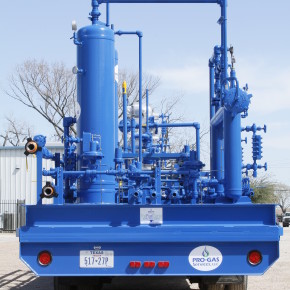
While there are dozens of different levers you can pull to tighten up your wellhead expenses, field gas conditioning provides the most lucrative opportunity to improve your bottom line. By extracting high-value NGLs from your gas stream and selling them independently, operators can avoid Btu surcharges from midstream suppliers while creating an entirely new cash flow stream from their existing well counts.
On top of that, locally trimming excess NGLs eliminates hazardous line restrictions and keeps heavy hydrocarbons out of your mileage-tested field equipment. Making the switch to a portable gas conditioning unit not only protects your current infrastructure from premature deterioration – but it funds your operation’s growth with inbound revenue from every working lease.
Our field-proven solutions are designed to do one thing: put more revenue back into your pocket. No matter your operation’s size or current gas production levels, our team at Pro-Gas LLC has the knowledge and resources to help you capitalize on every single ounce of NGLs your pumps produce.
Don’t let misguided equipment decisions hold your bottom line hostage. Contact Pro-Gas LLC today and see what else we can do to move your needle. We don’t sell “one-size-fits-all” solutions. From line pressure inconsistencies to local environmental ordinances, each of your challenges is unique. That’s why we sit down with your operations team to dissect your current gas chemistry, recommend the best equipment setup for your needs, and roll out an affordable system that begins paying you back as soon as it’s installed. Sound too good to be true? Call Pro-Gas today to learn more!
FAQ
Q: How does field gas conditioning allow me to recover more wellhead revenue?
Extracting NGLs from your wet gas stream prevents your sales lines from exceeding Btu thresholds, which means you’ll never be penalized for delivering high-quality fuel to your distributors.
Q: What makes portable storage tanks so crucial for remote natural gas recovery?
Because storage tanks can be moved and filled at will, operators have more flexibility when it comes to not only how much they charge for recovered liquids, but when — they charge their sweet spot.
Q: How does extracting NGLs improve my onsite fuel quality?
Heavy hydrocarbons take up a lot of real estate in your dry methane formula. By splitting those elements from your wellhead fuel, you can drastically improve your gas’s BTU rating and prevent premature engine failures.


