

Posted on: 11. 25. 25

The energy industry is undergoing a fundamental shift. For decades, our primary focus was solely on getting hydrocarbons out of the ground and into the pipeline. Today, however, the scope of our operations has expanded. We are no longer judged merely by our production volumes but by our stewardship of the resource and our adherence to an increasingly complex web of rules. At Pro-Gas LLC, we recognize that for modern operators, implementing vapor recovery units is no longer an optional “green” initiative; it is a license to operate.
The regulatory environment surrounding methane emissions reduction and Volatile Organic Compounds (VOCs) is tightening rapidly. From the federal level down to state agencies, the mandate is clear: capture the gas or shut in the well. This pressure can feel overwhelming, but we view it through a different lens. We see compliance as an opportunity for operational improvement. By capturing the rich vapors that flash off storage tanks, we not only meet the letter of the law but also capture a valuable revenue stream that was previously vanishing into thin air.
In this post, let us explore the intricacies of environmental regulations affecting the oil and gas sector and how the strategic deployment of VRU technology serves as the ultimate solution. We will examine the technical challenges of low-pressure compression, the financial realities of compliance, and the operational best practices that guarantee uptime. We want to guide you through turning a regulatory burden into a fixed asset.
The Regulatory Climate | Understanding EPA Quad O And Beyond
To navigate the current landscape, we must first understand the rules of the engagement. The driving force behind the push for vapor recovery units is the Environmental Protection Agency’s (EPA) New Source Performance Standards, specifically 40 CFR Part 60, Subpart OOOO, commonly referred to as “Quad O,” and its subsequent updates, Quad Oa, Ob, and Oc.
These regulations specifically target fugitive emissions and venting from crude oil and natural gas facilities. The core requirement dictates that storage vessels with the potential to emit (PTE) 6 tons or more of VOCs per year must reduce those emissions by 95 percent. In practical terms, this means that for the vast majority of producing wells—especially in the Permian, Eagle Ford, and Bakken basins—venting tank vapors to the atmosphere is illegal.
The consequences of non-compliance are severe. Beyond the substantial fines, which can reach tens of thousands of dollars per day per violation, there is the risk of forced shut-ins. We have seen operators lose significant production days because they failed to have a compliance strategy in place before an audit. Furthermore, the new “Super Emitter” program empowers third parties to report large emission events, putting operators under a microscope like never before.
What Is A VRU? | The Anatomy Of Flash Gas Recovery
A Vapor Recovery Unit (VRU) is essentially a compression system designed for a very specific, low-pressure application. Unlike a standard wellhead compressor that might take gas at 50 PSI and boost it to 1000 PSI, a VRU must pull gas from storage tanks at mere ounces of pressure and boost it high enough to enter the low-pressure gathering system or the suction side of a larger compressor.
The process begins with flash gas recovery. When crude oil is dumped from a high-pressure separator into a generic atmospheric storage tank, the sudden pressure drop causes light hydrocarbons (methane, ethane, propane, butane) to “flash” out of the liquid phase and become gas. Without a VRU, this gas builds pressure in the tank until it vents through the thief hatch or pressure relief valve.
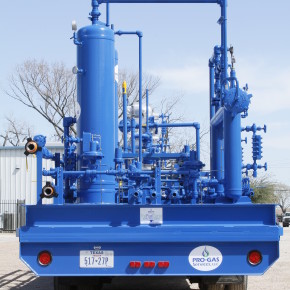
A Pro-Gas LLC VRU system typically consists of:
- Suction Scrubber: To remove any liquid carryover from the tanks.
- Compressor: Usually a rotary vane or screw compressor, chosen for its ability to handle wet, rich gas.
- Driver: An electric motor or natural gas engine.
- Bypass Valve: To recirculate gas when tank pressure is too low, preventing the unit from pulling a vacuum.
- Automation Control Panel: The brain of the system that monitors tank pressures and adjusts the compressor speed.
The technical challenge here is stability. Storage tanks are not pressure vessels; they are designed to hold liquid at atmospheric pressure. Pulling too much suction can collapse a tank (implosion), while failing to pull enough allows venting. Therefore, the precision of the VRU technology is paramount.
Selecting The Right Tech | Rotary Vane vs. Screw For VRUs
When we design a solution for compliance strategy, the choice of compressor type is critical. The two dominant technologies in this space are rotary vane and rotary screw compressors. Each has its place, but for many field applications, we lean heavily on specific designs based on the gas analysis.
Rotary vane compressors are exceptional for flash gas recovery in smaller to medium-sized batteries (volumes from 20 Mcfd up to 500 Mcfd). Their sliding vane design allows them to handle “wet” gas—gas heavily saturated with natural gas liquids (NGLs)—without damage. The oil injected into the cylinder coats the vanes and cylinder walls, protecting them from the corrosive elements often found in tank vapors, such as Hydrogen Sulfide (H2S).
Screw compressors are typically utilized for larger central facilities where the vapor volume is high (over 500 Mcfd) and relatively consistent. They offer high efficiency and smooth flow but can be more sensitive to particulates and liquids.
At Pro-Gas LLC, we assess the specific “richness” of the gas. Tank vapors are often incredibly rich, with BTU values exceeding 2000. This makes them valuable, but it also makes them dangerous for standard engines due to detonation risks. We verify that the driver—whether electric or gas—is rated to handle the fuel quality or that the facility has a separate fuel gas scrubber to provide lean gas to the engine.
Operational Efficiency | Managing Variable Flow Rates
The biggest enemy of operational efficiency in vapor recovery is the variable nature of the flow. Tank vapors do not generate at a constant rate. They surge when a dump valve opens on a separator and slow down when the separator closes. They also fluctuate wildly with ambient temperature; a hot summer day generates significantly more vapor than a cold winter night.
To maintain EPA Quad O compliance, the VRU must react instantly to these changes. If the unit is too slow to speed up, the tank pressure spikes and the thief hatch vents—a violation. If it is too slow to slow down, it pulls a vacuum, risking oxygen ingress.
We utilize Variable Frequency Drives (VFDs) on electric motors and sophisticated governor controls on gas engines to achieve this. A VFD allows the compressor to ramp its speed up and down millisecond-by-millisecond based on a pressure transducer on the tank. This “turndown” capability allows us to match the compressor’s displacement exactly to the vapor generation rate, securing a steady tank pressure of typically 2 to 4 ounces.
Consider linking to our previous discussion on Variable Frequency Drives for more technical insights.
The Danger Of Oxygen | Safety And Compliance
One of the most critical aspects of implementing vapor recovery units that we emphasize to every client is oxygen management. Because VRUs draw from atmospheric tanks, there is a constant risk of pulling air (oxygen) into the system if the pressure drops below zero (vacuum).
Oxygen in a gas stream is a catastrophic issue. First, it creates an explosive mixture. Second, most pipelines have strict tariff limits (often 10 ppm) for oxygen. If you push oxygen-laden gas into the sales line, the midstream company will shut you in.
To combat this, our systems utilize redundant safety shutdowns. We set a “low suction pressure” kill switch that shuts the unit down instantly if pressure approaches 0.5 ounces. Additionally, we recommend the installation of oxygen sensors on the discharge line. These sensors act as a final gatekeeper, shutting down the VRU and isolating the sales line if oxygen is detected. This attention to detail is what separates a basic install from a true Pro-Gas LLC solution.
Financial Metrics | The ROI Of Capture
While the impetus for installing a VRU is often environmental regulations, the financial argument is equally compelling. We encourage operators to look at the Return on Investment (ROI) of capture.
Let us run a hypothetical scenario based on a typical Permian battery:
- Vapor Volume: 100 Mcf/day.
- Gas Price: $2.50/Mcf (conservative).
- BTU Factor: 2.0 (Tank vapors are very rich).
- Realized Price: $5.00/Mcf (due to BTU uplift).
- Daily Revenue: $500.
- Annual Revenue: $182,500.
A standard VRU installation might cost between $80,000 and $120,000 depending on infrastructure needs. In this scenario, the unit pays for itself in less than eight months. After that, it generates pure profit.
This calculation does not even factor in the avoidance of fines. A single EPA fine for fugitive emissions can exceed the cost of the entire VRU system. When you combine the revenue from the gas with the risk mitigation of compliance, the decision to install VRU technology becomes a financial no-brainer.
Handling Liquids | The Wet Gas Challenge
Tank vapors are “wet,” meaning they are on the verge of falling back into liquid phase. When we compress these vapors, the increase in pressure and subsequent cooling in the discharge line causes NGLs to drop out. If not managed, these liquids can flood the compressor or slug the downstream facility.
We design our systems with robust scrubbing and temperature control. We often install a discharge scrubber after the compressor to catch these liquids. This “compressor condensate” is extremely high-gravity, valuable oil. We utilize automatic dumps to pump this liquid back into the oil storage tanks or a pressurized bullet tank.
If we fail to manage this liquid, it can dilute the compressor oil, leading to bearing failure. We implement a rigorous oil analysis program for all our VRU fleets. By monitoring the viscosity and dilution of the oil, we can adjust the operating temperatures (running the compressor hotter helps keep water in vapor phase) to extend the life of the equipment.
Scaling With Production | Modularity
One common mistake we see is oversizing. An operator expects a new three-well pad to produce massive volumes, so they install a giant VRU. When the wells decline, the unit is too big to run efficiently, constantly shutting down on low suction. Conversely, undersizing leads to venting during peak production.
We advocate for a modular approach to methane emissions reduction. Instead of one massive unit, it is often better to install two smaller units or a unit with a very wide turndown ratio. As production declines, we can easily swap the compressor for a smaller frame size while keeping the same skid and driver. This flexibility allows the compliance strategy to evolve with the life of the well.
At Pro-Gas LLC, we maintain a fleet of various sizes. We can deploy a 50 HP unit for initial flush production and swap it for a 20 HP unit six months later. This adaptability verifies that you are not paying for horsepower you do not need, while still capturing every cubic foot of gas.
Monitoring And Reporting | Verifying Compliance
Installing the unit is step one. Proving that it works is step two. Under EPA Quad O, operators must maintain records of the time the VRU was operating and any downtime events. If the VRU is down for maintenance and the tanks are venting, that volume must be calculated and reported.
We equip our units with telemetry that logs suction pressure, discharge pressure, and run status. This data is fed into the operator’s SCADA system. This digital trail is your insurance policy during an audit. It proves that you were capturing gas 98 or 99 percent of the time.
Furthermore, we assist in calculating the capture efficiency. By analyzing the run-time data against the theoretical GOR (Gas-Oil Ratio) of the well, we can provide reports that satisfy state and federal agencies. This data-driven approach removes the guesswork from oil and gas regulatory compliance.
Maintenance Best Practices | Keeping The VRU Online
A VRU is the hardest working compressor in the field. It runs 24/7/365 (ideally). To maintain this schedule, we implement strict maintenance protocols.
- Daily: Check oil levels and scrubber dumps. A stuck dump valve can flood the compressor in minutes.
- Monthly: Check belt tension and alignment. The varying loads from the VFD can cause belt fatigue.
- Quarterly: Calibrate pressure transducers. If the sensor drifts by just one ounce, it can cause venting or vacuum issues.
We also pay close attention to the bypass valve. This valve modulates to recirculate gas. If the seat wears out, hot gas leaks back to suction, causing the unit to overheat. Regular inspection of these control valves is essential for operational efficiency.
Consider linking to our Guide on Compressor Maintenance Schedules.
The Future Of Emissions | Zero Flaring
The industry trend is moving toward “Zero Flaring.” Major operators are pledging to eliminate routine flaring by 2030. Implementing vapor recovery units is the cornerstone of this ambition. We are moving toward a future where the only time a flare is used is during genuine emergency safety events.
We are also seeing the rise of “instrument air” systems powered by these VRUs. Instead of using methane to actuate pneumatic valves (which vent methane every time they stroke), operators are using compressed air. However, for remote sites, we can utilize the compressed gas from the VRU (dried and scrubbed) to power these devices, creating a closed-loop system that vents nothing to the atmosphere.
Optimize Your Business with Pro-Gas
The implementation of Vapor Recovery Units is the intersection of responsibility and profitability. We have navigated the complex requirements of environmental regulations, dissected the mechanics of flash gas recovery, and proven the financial viability of these systems.
At Pro-Gas LLC, we do not just rent compressors; we provide compliance strategies. We understand that every ounce of pressure matters and that every minute of downtime is a liability. By choosing the right VRU technology, sizing it correctly, and maintaining it with rigor, we help you navigate the regulatory waters with confidence.
Do not view the EPA mandates as a hindrance. View them as a challenge to optimize. Let us capture that value together.
Stop venting profits and start capturing value. Contact Pro-Gas LLC today to design a Vapor Recovery solution that guarantees compliance and boosts your bottom line.
FAQ | Vapor Recovery And Compliance
- What triggers the requirement for a VRU under EPA Quad O regulations?
The requirement is triggered based on the Potential to Emit (PTE) of the storage vessels. If a single storage tank or a battery of tanks has the potential to emit 6 tons or more of Volatile Organic Compounds (VOCs) per year, the operator must reduce these emissions by at least 95 percent. While flaring is a method of reduction, capturing the gas with a Vapor Recovery Unit (VRU) is the preferred method for both economic recovery and emissions reduction.
- How does a VRU handle the liquids found in wet tank vapors?
VRUs designed for wet gas, such as rotary vane compressors, handle liquids through a combination of robust scrubbing and oil injection. The suction scrubber removes the bulk of the free liquid before it enters the compressor. Inside the compressor, injected oil seals the compression chamber and protects the metal surfaces from corrosion. Furthermore, the discharge temperature is maintained high enough to prevent water from condensing inside the compressor oil, while discharge scrubbers capture any hydrocarbons that fall out after compression, pumping them back to the storage tanks.
- Can a VRU system completely eliminate the need for a flare?
While a VRU is designed to capture 95 to 100 percent of the routine vapor production, it does not completely eliminate the need for a flare or a combustor. A flare is still required as a safety relief device. In the event of a mechanical failure of the VRU, a power outage, or a massive slug of gas that exceeds the VRU’s capacity, the gas must have a safe outlet. The VRU and flare work in tandem: the VRU handles the daily load to maximize revenue and minimize emissions, while the flare stands by for emergency relief.


